Custom Vertical Roof Buildings in Knoxville and East Tennessee
Protect your valuable equipment with maximum snow and rain runoff using vertical roof metal buildings.
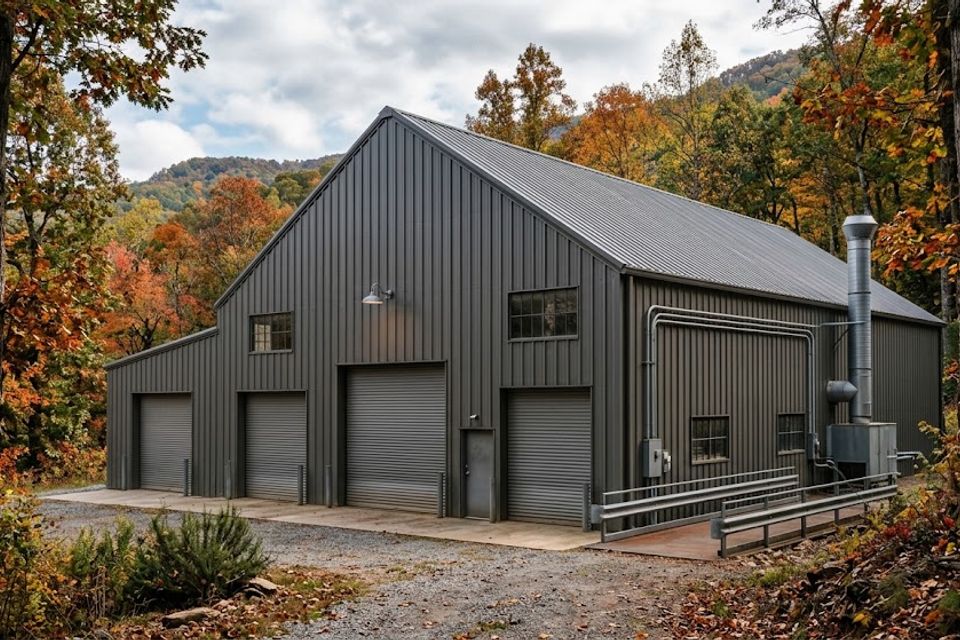
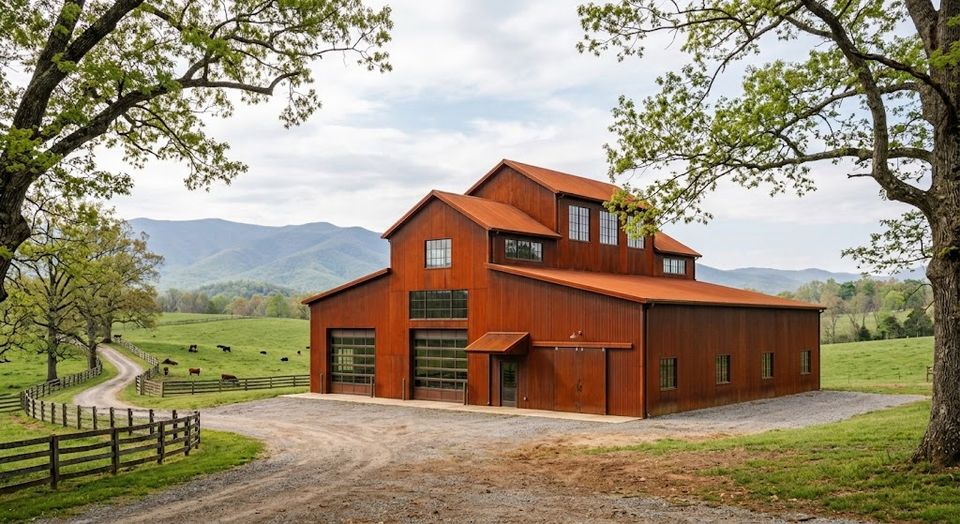
Vertical roof buildings feature roof panels oriented vertically from peak to eave, supported by horizontal hat channel purlins. This orientation allows rain, melting snow, and falling leaves to slide off naturally, preventing standing water and debris accumulation that can cause corrosion on standard horizontal roofs.
Vertical roof buildings are recommended for fully enclosed garages, commercial workshops, high-clearance RV shelters, and agricultural equipment barns. Their reinforced roof framing provides the structural strength and drainage efficiency required for long-term storage across East Tennessee mountain climates.
Yes, property owners can configure roll-up garage doors, walk-in entry doors, windows, insulation packages, and custom color combinations for walls and trim through the interactive online 3D builder to meet their specific residential or commercial storage requirements.
The site must be cleared and leveled before assembly. Vertical roof buildings can be anchored onto poured concrete slabs, level crushed gravel pads, asphalt surfaces, or compacted ground using site-appropriate concrete wedge anchors, mobile home anchors, or heavy-duty rebar pins.
Direct delivery and professional installation operate from regional hubs in Knoxville and Elizabethton, serving surrounding East Tennessee towns including Kodak, Strawberry Plains, Mascot, Talbott, Dandridge, Erwin, Roan Mountain, and Bluff City, along with Western North Carolina communities including Burnsville, Mars Hill, and Newland.